Journal // Gastronomy & Curation
Beyond Sake: Pairing Spontaneous-Fermentation Wild Ales with High-End Honolulu Omakase
Published July 2026 • 6 Min Read
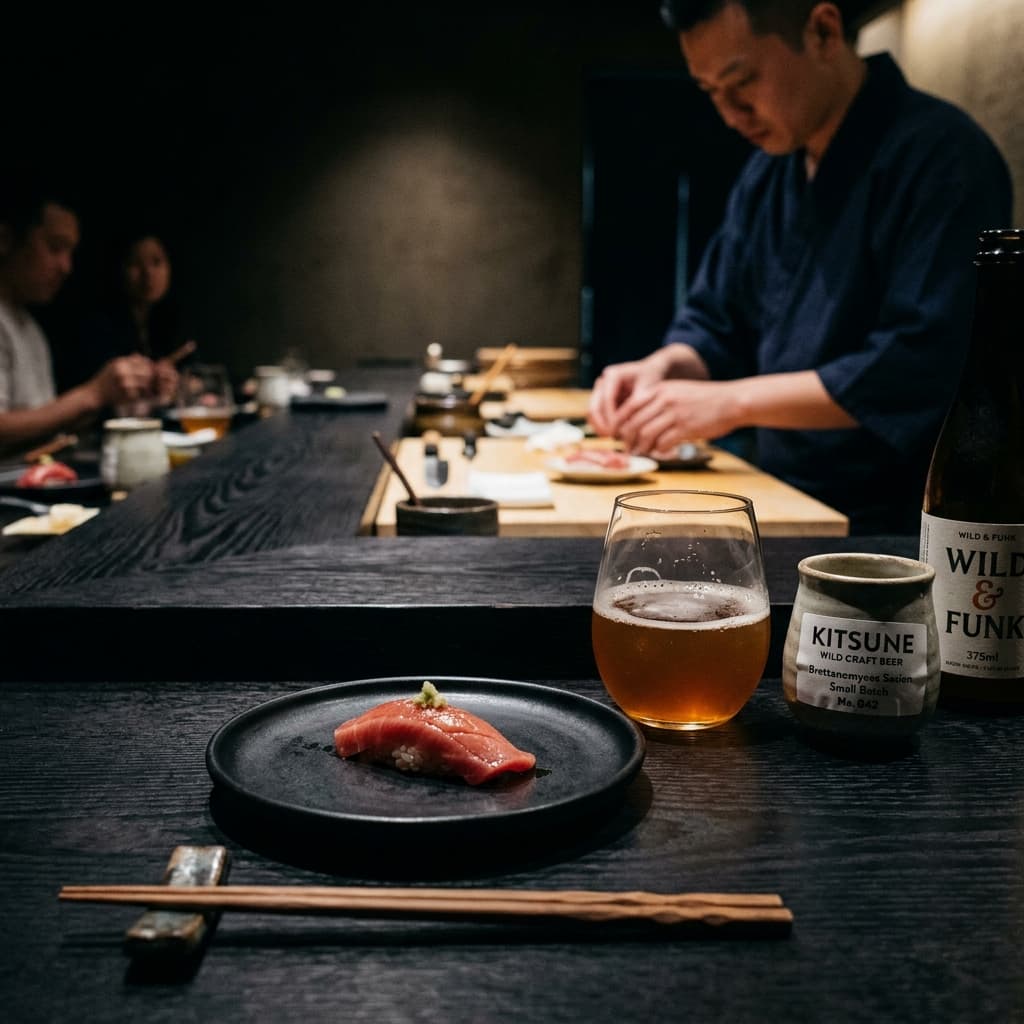
When evaluating the gastronomic landscape of fine dining on Oʻahu, the pairing menu for a premium omakase experience in Honolulu has historically followed an established, traditional trajectory: dry sakes, focused white wines, or champagne. While these profiles serve an admirable purpose, a compelling sensory frontier emerges when pairing these raw fish courses with unpasteurized, spontaneous-fermentation West Coast wild ales.
For the collector investing in premium dining experiences, introducing the structural complexity of a living wild ale offers an elegant enhancement to the traditional flavor matrix.
The Acid vs. Fat Dynamic
The cornerstone of high-end sushi relies on the contrast of textures and natural lipids. Courses featuring premium, fatty selections—such as Otoro (fatty tuna), King Salmon, or rich local Uni—demand a drink companion capable of handling that structural density. Traditional pairings rely on alcohol warmth or dry minerals to clear the palate.
Spontaneous-fermentation wild ales introduce a dual-action acid matrix comprised of organic lactic and citric acids. This sharp, complex acidity performs a precise culinary task: it cuts directly through the rich, buttery fat profiles of the fish, emulsifying the lipids on the palate without overwhelming the delicate flavor notes.
Rather than washing away the experience, the acid matrix clean-cuts the heavy finish, highlighting the natural sweetness and mineral undertones of the seafood.
The Fine Carbonation Cleanser
Bottle-conditioned, living wild ales undergo a slow secondary fermentation in the glass. This natural process yields incredibly fine, micro-effervescent carbonation that cannot be replicated by commercial force-carbonation methods.
Between distinct sushi courses, these microscopic bubbles act as an exquisite palate cleanser. They gently scrub the tongue's taste receptors, lifting residual oils and preparation elements without numbing the taste buds. This resets your sensory slate completely, ensuring that every course is experienced with fresh clarity.
The Flavor Curation Map
Integrating wild ales into fine dining requires careful curation. The flavor profiles must be mapped precisely to the progression of the meal:
- White-Fleshed Fish & Shellfish: Paired alongside crisp, young, oak-aged wild ales displaying soft lemon-rind crispness and subtle mineral funk.
- Rich, Fatty Cuts (Otoro/Salmon): Accompanied by stone-fruit forward wild ales or multi-year blended gueuze-style profiles, where the depth of the oak tannin structures balances the intensity of the fish.
By moving beyond standard selections and introducing flawlessly preserved, unpasteurized wild expressions to the table, the culinary experience transitions from traditional to exceptional.
THE LETTER // FREE, MONTHLY, WORTH READING
Get the Haliʻā Letter — new reviews, the science of beer freshness, and dispatches from the West Coast beer cities we cover. Free, no spam, unsubscribe anytime.